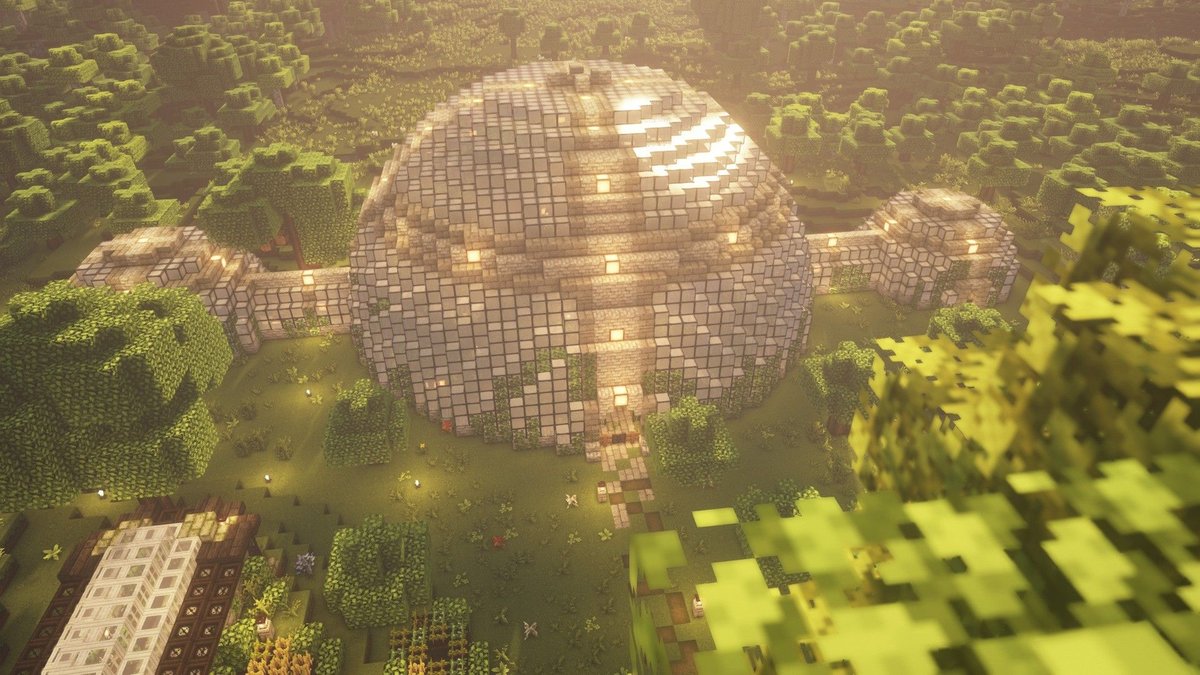
Minecraft, at its heart, is a canvas for boundless creativity. While many builders gravitate towards the familiar angles of cuboid constructions, there's an undeniable allure to the organic curves of a dome. Crafting an advanced Minecraft dome goes far beyond merely laying out a circular footprint; it's about mastering geometry, integrating complex features, and designing an interior that feels both spacious and intimate within its unique spherical constraints. This guide dives deep into Advanced Minecraft Dome Features & Interior Design, empowering you to build not just a structure, but a truly remarkable architectural statement in your blocky world.
At a glance: Key Takeaways for Your Advanced Dome Build
- Beyond Basic Shapes: Explore multi-tiered, integrated, and industrial-scale domes that push the boundaries of Minecraft geometry.
- Biome Integration is Key: Design your dome to complement its environment, whether it's a desert oasis, a lush greenhouse, or an aquatic haven.
- Exterior Tells a Story: Use textures, landscaping, and functional additions to give your dome a unique visual identity.
- Interior Maximization: Learn to optimize curved spaces for living, farming, storage, and even Redstone automation.
- Functionality & Aesthetics: Balance practical needs (mob proofing, resource management) with stunning visual appeal.
- Redstone, Farms & More: Discover how to weave advanced mechanisms and functional areas seamlessly into your dome's design.
Beyond the Sphere: Why Domes Captivate Builders
There's something inherently captivating about a dome. Unlike the rigid edges of a traditional house, a dome offers a sense of protection, expansive views (especially with glass), and an aesthetic that can range from ancient wonder to futuristic marvel. They're a testament to a builder's skill, challenging you to think beyond the grid and embrace radial symmetry. What often starts as a simple curved roof quickly evolves into a complex project demanding forethought in structural integrity, material choices, and efficient use of space. For those looking to transcend basic structures, the dome presents an exciting, advanced building opportunity that stands out in any Minecraft landscape.
Mastering the Arc: Advanced Dome Shaping Techniques
The foundation of any great dome is its shape. While a simple hemisphere is a good starting point, advanced builders push these boundaries, creating structures that are truly unique.
The Basics: From Circles to Spheres (A Quick Refresher)
Before diving into complex shapes, ensure you're comfortable with the fundamentals. Building a perfect circle or sphere in Minecraft can be painstaking manually, which is why many savvy builders leverage external tools. When you're ready to lay out that flawless curve, consider starting with a Minecraft dome generator to plot your initial block placements, saving you hours of trial and error. This precision allows you to then focus on the creative refinements.
Semi-Domes & Multi-Tiered Structures
Not every dome needs to be a perfect half-sphere. The "Semi Dome House" concept, for instance, artfully combines a large primary dome roof with a smaller, elevated dome on top, creating visual interest and adding depth to the silhouette. Similarly, structures like the "Egg House" stack two domes, often with vibrant colors, to achieve a whimsical, almost "anime vibe." This multi-tiered approach allows for varied interior ceiling heights and distinct functional zones within a single structure.
Industrial Scale Domes: Pushing the Limits
For the truly ambitious, the "Industrial 512x512x256 Dome" exemplifies what's possible. Utilizing Minecraft's maximum height limit from bedrock to the 256 y-layer, these colossal structures can house entire complexes—multiple buildings, automated farms, and even smaller domes or spheres within their colossal shells. Digging out such a massive space is a project in itself, but it yields immense resources, particularly valuable minerals, making it a functional as well as an aesthetic endeavor.
Integrated Domes: Blending with the Terrain
Beyond freestanding domes, consider integrating your structure directly into the environment. The "Classic Glass Dome" is often built as a half-dome burrowed into a hillside, creating an "upside-down bowl" effect that minimizes visual impact from certain angles while maximizing views from within. The "Underground Dome House" takes this a step further, expanding downwards to add multiple subterranean levels for farms, bedrooms, smelting rooms, and extensive storage. This approach provides depth and extra space, making your dome feel much larger than its visible footprint.
Materials Beyond the Obvious
While glass is a popular choice for its transparency, don't limit your palette. The "Basic Polished Diorite Dome" tutorial showcases how clean, modern aesthetics can be achieved with uniform, polished blocks. Combining materials, like the "Semi Dome House's" cyan roofs with white trim and dark wood bases, adds texture and character. Exploring advanced techniques for glass builds can unlock even more possibilities for unique effects.
Biome Harmony: Designing Domes for Their Environment
The most compelling domes don't just exist in a biome; they become a part of it. Thoughtful material selection and landscaping allow your dome to feel natural, whether it's a stark desert outpost or a thriving jungle research station.
Desert Domes: Ancient & Overgrown
Imagine a "Desert Dome" with a clean white texture, perhaps quartz or smooth sandstone, designed to stand out against the arid landscape. Adding subtle details like a chimney, overgrown bushes, and vines can give it an ancient, forgotten look, as if it's been claimed by time. This approach works beautifully to create a sense of history and mystery.
Verdant Greenhouses: Life in a Plain Biome
A "Dome Greenhouse" is a functional marvel, particularly effective in plain biomes. By combining spruce wood and white stained glass, with an exposed dark trim, you create a structure that feels both rustic and productive. Leaves become a primary building block, not just for decoration but to signify its purpose. Remember an important actionable insight here: place torches or other light sources strategically around your greenhouse to prevent hostile mobs like creepers from spawning and damaging your precious crops or structure.
Aquatic Marvels: Underwater Domes
For an epic challenge, an "Underwater Dome Tree House" offers a truly unique living experience. A glass dome built underwater, housing a thriving treehouse inside, can adapt to aquatic, natural, or even futuristic themes depending on your choice of interior blocks. A crucial tip for any underwater build: construct a conduit nearby. It provides unlimited breathing and crystal-clear vision underwater, making your base much more livable. Finding buried treasure chests is a key step to crafting this essential block, so be prepared for some exploration and treasure hunting when delving into underwater bases.
Subterranean Sanctuaries: The Underground Dome
The "Underground Dome House" takes the concept of integration further by creating an enhanced dome base almost entirely below the surface. By digging deep, you unlock vast spaces for extensive farms, private bedrooms, efficient smelting rooms, and expansive storage facilities. The ceiling itself becomes a canvas for design; decorating it with flower rings or lanterns can transform a utilitarian space into a cozy, well-lit sanctuary.
Forest & Bee Sanctuaries: The Bee Dome
Perfect for flower forest biomes or even early-game players with limited resources, a "Bee Dome" is both stylish and functional. Constructed with spruce, dark oak wood, and white stained glass, it's designed specifically for housing a bee farm. Its natural aesthetic blends seamlessly, providing an inviting home for your buzzing companions and a steady supply of honey.
Exterior Features: Crafting a Visually Stunning Shell
A dome's exterior is its first impression. Advanced design means moving beyond a simple smooth curve to add intricate details, textures, and functional elements that enhance its beauty and utility.
Texture & Palette: Layering for Impact
The choice of blocks and their arrangement can dramatically alter your dome's character. Consider the "Desert Dome's" clean white contrasted with natural overgrowth, or the "Semi Dome House's" vibrant cyan roof, crisp white trim, and grounding dark wood base. Experiment with block gradients, mixing similar-toned blocks (e.g., different types of grey concrete, polished stone, and wool) to add subtle depth without breaking the aesthetic.
Landscaping & Access: Paths to Your Haven
Don't neglect the area immediately surrounding your dome. Pathways crafted from blocks like pathway, podzol, and coarse dirt, as seen in the Bee Dome example, create an inviting approach. Strategic placement of spruce fences, lanterns, and various flowers and leaves can make the dome appear as if it's naturally emerged from its surroundings, rather than simply been dropped onto the landscape. For a truly overgrown, natural look, randomly place leaves and flowers around the base and lower sections of your dome.
Functional Additions & Architectural Details
Beyond purely aesthetic choices, integrate functional elements into your dome's exterior. Chimneys, intricate entryways, terraced levels, or even small attached greenhouses can break up the monolithic shape and add practical value. These elements should flow organically from the dome's form, not feel like tacked-on afterthoughts.
Lighting & Security: Deterring the Unwanted
Exterior lighting is crucial for both aesthetics and safety. Torches, lanterns, glowstone, or even hidden shroomlights can illuminate your dome at night, highlighting its features. More importantly, proper lighting prevents hostile mobs from spawning around your perimeter, protecting your build and any surrounding farms, as exemplified by the advice for the "Dome Greenhouse."
Interior Design: Maximizing Curved Spaces
Designing an interior within a curved structure presents unique challenges and exciting opportunities. Traditional rectangular rooms won't quite fit, forcing a creative rethinking of space.
The Challenge of Curves: Layout & Furniture
The primary challenge is adapting to non-linear walls. Instead of perfectly squared-off rooms, you'll work with radial segments or central open plans. Built-in furniture that hugs the curve, such as circular seating arrangements or custom storage units, can be highly effective. Think about how to segment space using half-walls, carpets, or even different flooring textures rather than full, straight walls.
Verticality & Multi-Level Design
Domes often offer significant vertical space. Embrace this by incorporating mezzanines, lofts, or multiple floors. A central pillar or staircase can serve as an anchor, with living spaces spiraling upwards. This not only adds square footage but creates dynamic views and a sense of grandeur within your dome.
Lighting for Ambiance & Function
Good lighting is paramount. Natural light streaming through glass domes is fantastic, but for enclosed or underground sections, a blend of artificial sources is key. Lanterns hung from chains (as suggested in the Bee Dome tutorial), glowstone set into floors or ceilings, and strategically placed sea lanterns can provide both practical illumination and a cozy ambiance. Think about how light plays off the curved surfaces to enhance depth.
Material Choices: Warmth & Openness
The materials you choose for your interior greatly influence the feel of the space. Warm woods (spruce, dark oak), comfortable textiles (carpets, banners), and natural elements (leaves, flowers) can make a dome feel inviting and cozy. For a more futuristic or sterile look, consider concrete, quartz, or iron blocks, perhaps paired with tinted glass to alter light quality.
Advanced Interior Features & Functionality
Once the shell is perfected and the interior principles are understood, it's time to infuse your dome with advanced functionality that makes it a true base.
Automated Farms & Resource Production
Domes are excellent for integrating functional farms. Whether it's a "Dome Greenhouse" for crops, an extensive "Underground Dome House" with multiple farm plots, or a dedicated "Bee Dome" for honey production, the enclosed nature can offer protection and climate control.
The Bee Dome tutorial offers fantastic actionable insights for a functional farm:
- Honey Cargo: Create dedicated "honey cargo" areas using honey blocks wrapped in spruce trapdoors, with barrels stacked nearby to simulate a working honey harvesting station.
- Beehive Setup: Dig down one block, place a campfire (which pacifies bees). Place a temporary block above it, wrap it with spruce trapdoors, then place a beehive on top. Repeat for multiple beehives to create an efficient and safe bee farming operation.
- Interior Pathways: Define internal flow with varied blocks like podzol, pathway, and coarse dirt.
Optimizing your Minecraft farms within a dome requires careful planning of light, water, and space.
Living Quarters & Social Hubs
Dedicate sections to comfortable living. Bedrooms can be tucked into alcoves or on upper levels for privacy. A central common area with seating and perhaps a fireplace creates a social hub. The curved walls lend themselves well to built-in seating or display areas.
Storage & Smelting Rooms
Efficient storage is crucial in any base. In an "Underground Dome House," you can create expansive storage rooms with rows of barrels or chests. For smelting, consider integrating auto-smelters or large banks of furnaces that can be accessed easily. Remember to manage fumes by venting or placing them in well-ventilated sections.
Redstone Automation: Concealed Power
Advanced domes often feature hidden Redstone mechanisms. Think concealed doors, automated lighting systems that respond to daylight sensors, or even complex traps. Mastering basic Redstone mechanisms is a prerequisite, allowing you to seamlessly integrate functionality without cluttering your elegant dome design. Imagine a central control panel that manages all your dome's automated systems.
Futuristic Elements: Energy Fields & Tech Hubs
For those leaning into a modern or sci-fi aesthetic, the "Futuristic Dome Base" is a prime example. Utilize glass for the upper sections and other polished blocks for the bottom to create a striking contrast. Lighting effects, such as glowstone or sea lanterns behind colored glass, can mimic "energy field effects" or futuristic displays. Data centers, teleportation pads, or advanced machinery can all find a home within these sleek, modern domes.
Decorative Touches: Personalizing Your Space
Finally, personal touches make a dome feel like home. Use saved leaves and flowers (as in the Bee Dome tutorial) to further decorate the inside, creating a cozy, natural atmosphere. Item frames, banners, custom paintings, and even a pet corner can bring personality to your curved abode. The "Egg House's" vibrant colors show how bold decorative choices can infuse a dome with unique character.
Overcoming Dome Design Hurdles
Even with advanced techniques, building a dome comes with its own set of challenges. Anticipating and addressing these early can save you headaches later.
Mob Spawning: The Ever-Present Threat
Due to their often vast, open interiors and unique curvature, domes can sometimes have unexpected dark spots where hostile mobs can spawn. Beyond the exterior lighting, ensure thorough interior illumination using lanterns, glowstone, and torches. Consider a central light fixture or a grid of hidden light sources within the ceiling or floor to provide consistent light levels throughout.
Resource Management: Digging Deep
Large domes, especially "Industrial Scale Domes" or "Underground Dome Houses," are incredibly resource-intensive. Planning your resource gathering strategy beforehand is critical. Often, the excavation itself can provide a significant portion of the stone, dirt, and minerals needed for the build. For specialized blocks like glass, concrete, or specific wood types, ensure you have efficient farms or mining operations in place. Essential building tips and tricks often emphasize resource planning.
Visual Clutter vs. Functionality
It's easy to over-decorate or over-automate a dome, leading to a cluttered interior that detracts from its unique form. Strive for a balance between aesthetic appeal and practical functionality. Conceal Redstone wiring, build storage into walls, and use multi-functional furniture where possible. Let the dome's natural shape be the star, accentuating it with thoughtful additions rather than burying it under excessive detail.
Maintaining Cohesion: Inside and Out
Ensure that your interior design complements your exterior aesthetic. A rustic, woodland-themed dome exterior should ideally lead into an interior that uses natural materials and warm lighting, rather than a jarring futuristic metal and neon setup. Consistency in theme and material palette creates a more immersive and satisfying build.
Your Next Arch-itectural Adventure
Armed with these advanced concepts and practical insights, you're ready to embark on your next grand architectural project. Whether you choose to construct a sprawling "Industrial Dome," a tranquil "Underwater Dome Tree House," or a bustling "Bee Dome" sanctuary, remember that the most rewarding builds are those that blend ambitious vision with meticulous execution. Take inspiration from the diverse examples, adapt the practical tips, and don't be afraid to experiment. Your Minecraft world awaits its next spherical masterpiece!